Uncover the essentials of the Roblox Touched event a fundamental part of interactive game development. This comprehensive guide navigates beginners and seasoned creators through its mechanics showcasing how to detect player interactions object collisions and trigger dynamic in-game actions. Learn about common use cases best practices for efficient scripting and troubleshooting tips. Dive deep into performance considerations for creating seamless experiences. Mastering the Touched event is crucial for crafting engaging worlds where objects react intelligently to players enhancing immersion and gameplay. Discover why this event is pivotal for building responsive and captivating Roblox games.
Hey there, fellow Roblox developer! So, you're diving into the 'Touched' event, right? It's one of those core mechanics that truly brings your games to life, allowing objects to react to interaction. Think of it as the magical 'boop' detector in your virtual world! We're talking about how your lava blocks know to hurt players, or how your treasure chests open when you get near. This ultimate living FAQ is here to guide you through everything you need to know, updated for the current year's best practices and common challenges. We'll cover beginner questions, common bugs, clever tricks, and even some advanced tips to help you master this essential aspect of Roblox scripting.
The Touched event is essentially Roblox's way of telling your script, 'Hey, something just bumped into this part!' It's the cornerstone of creating interactive game elements, from simple buttons to complex damage systems. Understanding it means you can make your game world responsive and engaging. It's about empowering your creations to feel alive, reacting realistically to player actions and environmental changes.
Why does it matter so much? Because without it, your games would feel static and unresponsive. Every time a player collects a coin, steps on a trap, or triggers an event, the Touched script is often working behind the scenes. Mastering it means you can build more dynamic, immersive, and fun experiences for everyone playing your game. It’s a foundational skill that opens up a world of possibilities for creative game design!
Most Asked Questions about Roblox Touched Script
What is the Roblox 'Touched' event?
The Roblox 'Touched' event is a fundamental function that fires whenever two physics-enabled parts collide. It acts as a trigger, allowing scripters to detect physical contact between objects in their game world. This is crucial for creating interactive elements like doors that open, collectible items that disappear, or hazards that damage players upon contact. It's your primary tool for making objects react to physical presence.
How do I make a script detect when a player touches a part?
To detect a player touching a part, you connect the part's 'Touched' event to a function. Inside this function, you receive the 'otherPart' that initiated contact. You then check if 'otherPart.Parent' contains a Humanoid, indicating it's likely a player's character. Use `game.Players:GetPlayerFromCharacter(otherPart.Parent)` to confirm it's a player, then execute your desired action. This ensures your interaction is player-specific.
Why is my 'Touched' script firing multiple times?
Your 'Touched' script might fire multiple times due to the physics engine registering multiple small contacts, especially with player movement. This is a common issue. To fix it, implement 'debouncing' by using a cooldown variable. Set a boolean to `true` when the part can be touched, then `false` immediately after the first touch. Use `task.wait()` for a short period before setting it back to `true`, preventing rapid re-triggering. This ensures your script runs only once per intended interaction.
How can I make a 'Touched' event only activate for specific objects?
You can make a 'Touched' event activate only for specific objects by checking the `otherPart` argument provided to your connected function. Use `if` statements to verify the name, parent, or a specific tag of the `otherPart`. For example, `if otherPart.Parent:FindFirstChild('Humanoid') then` checks for a player. For advanced filtering, utilize CollisionGroups to define which types of parts physically interact, preventing unnecessary event fires. This selective activation makes your scripts much more efficient.
What are 'CollisionGroups' and how do they relate to 'Touched' events?
CollisionGroups allow developers to define custom collision rules between sets of parts. You assign parts to different groups, then specify which groups can or cannot collide with each other. This directly impacts 'Touched' events because if two parts are in non-colliding groups, their physics engine will prevent contact, and thus the 'Touched' event will not fire. This is an advanced trick for performance and logical organization, reducing unwanted event triggers. It's a powerful tool for sophisticated interaction management.
What should I do if my 'Touched' event doesn't seem to be working? (Bugs & Fixes)
If your 'Touched' event isn't working, first, double-check that both parts involved have `CanCollide` set to `true` and aren't `Anchored` in a way that prevents initial contact. Ensure your script is located correctly (e.g., in `ServerScriptService` or directly in the part). Verify the function name and parameters in your `:Connect()` statement are correct. Print debug messages within your function to see if it's even being called. Also, remember debouncing can sometimes prevent a perceived first touch if not reset correctly. Persistence is key for debugging!
Are there any performance tips for using 'Touched' events efficiently? (Tips & Tricks)
Absolutely! For efficient 'Touched' events, primarily use debouncing to prevent excessive firing. Avoid running computationally expensive operations (like `game.Players:GetPlayerFromCharacter`) until you've confirmed `otherPart` is relevant. Only attach 'Touched' events to parts that genuinely need them, especially avoiding them on constantly moving or frequently created/destroyed objects if simpler checks suffice. Disconnect events on parts that are destroyed or become inactive to prevent memory leaks. Finally, leverage CollisionGroups to filter collisions at the physics level, reducing overall event overhead. These tricks make your game run smoother.
How can I use 'Touched' for environmental hazards or traps? (Builds & Endgame)
Using 'Touched' for hazards is straightforward and highly effective. Create a part (e.g., a lava pool) and attach a server script. In its 'Touched' event function, check if the `otherPart.Parent` is a player's character. If it is, get the `Humanoid` and apply damage using `humanoid:TakeDamage()`. Implement debouncing with a `task.wait()` to prevent instant death and allow players to escape. For more advanced traps, use 'TouchEnded' to reset the trap or stop a continuous effect once the player leaves the area. This creates dynamic and challenging environments.
Still have questions?
If you're still scratching your head, don't worry! The Roblox developer community is fantastic. Check out the official Roblox Creator Documentation, watch some YouTube tutorials from seasoned developers, or hop onto the Roblox Developer Forum. Some popular related guides include 'Mastering RemoteEvents and RemoteFunctions' and 'Advanced Character Controls'. Keep experimenting; that's the best way to learn!
Ever wondered why your Roblox character takes damage when it touches a lava block or why a door opens when you step on a pressure plate? It all comes down to the magical Touched event in Roblox scripting. This foundational concept is what makes your game worlds feel alive and responsive. We're going to dive deep into why this event is so crucial and how you can harness its power effectively.
The structure for this article is carefully designed for high scannability and user-friendliness. We employ clear, hierarchical headings like H2 and H3 to segment complex topics into easily digestible parts, letting you quickly find what you need. Short paragraphs, typically 2-4 sentences long, prevent information overload. Key concepts are highlighted with bold text for immediate attention. Bulleted lists present information in an easy-to-absorb format, perfect for grasping steps, tips, or distinctions. This approach directly answers 'Why' by explaining purpose and 'How' by giving practical guidance, ensuring you get answers efficiently.
Let's talk about Roblox event handling. Why is event handling so utterly crucial in Roblox scripting? It's the very heartbeat of interactive experiences; without events, your game would just be a static scene. The Touched event, specifically, allows your scripts to react dynamically when two parts collide, making things like character movement, item pickups, or environmental hazards possible. It's the primary way objects communicate their physical interactions within your game.
Next up, **scripting best practices Roblox**. How can developers ensure their Touched scripts are both efficient and secure, creating smooth gameplay without hitches? Always remember to disconnect events when they're no longer needed, especially when a part is destroyed or changes state, to prevent memory leaks. Also, consider server-side validation for critical interactions to prevent exploiters from manipulating client-side events. These practices keep your game running smoothly and protect against unwanted interference.
Then there's **detecting player interaction Roblox**. What are the most effective and reliable ways to detect player interaction using the Touched event? The simplest approach involves connecting the Touched event to a function that checks if the 'otherPart' belongs to a player character. You can identify the character and then the player, allowing you to trigger specific actions like giving them a tool or applying damage. It's a fundamental technique for creating responsive game elements.
Let's also consider **Roblox hit detection**. When should you specifically use the Touched event for hit detection versus other potential methods available in Roblox? Touched is excellent for general area-of-effect interactions like proximity triggers, damage zones, or collectible pickups. However, for precise combat hit detection, raycasting or magnitude checks might offer more reliable and customizable solutions, especially in fast-paced scenarios. Choosing the right method depends entirely on your specific gameplay needs.
Finally, we need to address **performance optimization Roblox scripts**. Where exactly can performance issues crop up when using Touched events, and more importantly, how can these be effectively mitigated? Frequent Touched events on many non-critical parts can bog down performance, especially with complex functions attached. To mitigate this, consider only attaching Touched events to parts that genuinely need to react to collisions, and use debouncing techniques to prevent functions from firing too rapidly. Thoughtful scripting can make all the difference here.
Beginner / Core Concepts
Getting started with the Touched event in Roblox can feel a bit daunting, but I promise, it's totally manageable once you grasp the basics. We're going to walk through some common questions folks have when they're just dipping their toes into this powerful feature. Don't worry, you've totally got this, and we'll break it down piece by piece.
1. **Q:** What is the 'Touched' event in Roblox and why is it so important for game development?
**A:** The Touched event is a fundamental feature in Roblox Studio that fires whenever a part physically contacts another part. Imagine it like a digital 'ping' that happens when two objects bump into each other in your game world. This is incredibly important because it's the primary way you create interactivity and detect collisions without manually checking positions constantly. You'll use it for everything from triggering traps, opening doors, making collectibles disappear, or even registering hits in a sword fight. It’s what makes your game react to player actions and environmental elements, making your experiences feel dynamic and alive. You'll literally use this in almost every game you build, it’s that vital. Try thinking of a simple interaction you want in your game; chances are, Touched is your first step to making it happen. You've got this!
2. **Q:** How do I connect a function to a 'Touched' event on a part?
**A:** Connecting a function to a Touched event is pretty straightforward, and honestly, this one used to trip me up too until I got the hang of the syntax. You'll generally target the specific Part you want to monitor, then use the .Touched:Connect(YourFunctionName) syntax. For instance, if you have a part named 'LavaBlock' in your workspace and a function called 'OnTouch', you'd write script.Parent.LavaBlock.Touched:Connect(OnTouch). This 'Connect' method tells Roblox, 'Hey, when LavaBlock gets touched, run my OnTouch function!' The function you connect will automatically receive the 'otherPart' that touched it as its first argument, which is super handy for knowing *what* touched your object. Remember to define your 'OnTouch' function before connecting it. It's a pattern you'll see everywhere in Roblox scripting, so mastering it early is a huge win. You'll be connecting events like a pro in no time!
3. **Q:** What information does the 'Touched' event provide about the collision?
**A:** When a Touched event fires, it automatically passes one crucial piece of information to your connected function: the 'otherPart'. This 'otherPart' is literally the BasePart that initiated the collision with the part you're monitoring. So, if your player character, 'NoobPlayer', touches a 'Coin' part, your Coin's Touched event function will receive 'NoobPlayer's Torso (or whichever part first touched it) as the 'otherPart' argument. This is invaluable! You can then use this 'otherPart' to determine if it's a player, an enemy, or just another game object. From there, you can climb up the Roblox hierarchy using otherPart.Parent to find the Character or even the Player object itself. This allows you to create incredibly specific and smart interactions based on who or what is touching your object. This might seem simple, but its power is immense for dynamic gameplay. Give it a shot and see how much info you can pull from that 'otherPart'!
4. **Q:** What's the difference between 'Touched' and 'TouchEnded' events?
**A:** I get why this distinction can be a bit confusing for new scripters, but it's really important for certain types of interactions. The Touched event fires *once* when a part *initially makes contact* with another part. Think of it as the moment of impact. On the other hand, the TouchEnded event fires *once* when a part *stops making contact* with another part. So, if your character steps onto a pressure plate, 'Touched' fires. If they then step off, 'TouchEnded' fires. This distinction is vital for mechanics that need to know both when an interaction starts and when it stops, like a button that stays pressed only while a player is on it, or a debuff that applies only while standing in a toxic puddle. Many simple interactions only need 'Touched', but for more complex state management, 'TouchEnded' becomes your best friend. Play around with both to really feel the difference!
Intermediate / Practical & Production
Alright, let's step up our game a bit! You've got the basics down, which is awesome. Now we're going to tackle some more practical scenarios and best practices that you'll absolutely need when building more complex and polished Roblox games. These techniques will help you write cleaner, more efficient, and robust scripts. It's time to build smarter!
1. **Q:** How can I make sure my 'Touched' event only fires once per interaction (debouncing)?
**A:** Preventing your Touched event from firing multiple times for a single interaction, often called 'debouncing', is a common and super important technique. It's something that used to cause me headaches too! Parts in Roblox can 'touch' each other many times in quick succession due to physics engine quirks, leading to your script running repeatedly. The simplest way to debounce is to use a boolean variable, often called 'canTouch' or 'cooldown'. You set 'canTouch' to true initially. When the Touched event fires, you check if 'canTouch' is true. If it is, you set 'canTouch' to false, execute your code, and then use task.wait() for a short duration (e.g., 0.5 seconds) before setting 'canTouch' back to true. This creates a brief cooldown period where the event won't trigger again, ensuring your code runs just once per intended interaction. It's a game-changer for many mechanics!
2. **Q:** How do I check if the 'otherPart' belongs to a player character using 'Touched'?
**A:** This is arguably one of the most frequent uses for the Touched event: figuring out if a player just touched something important! It's a workflow you'll perform constantly. When your Touched event function receives 'otherPart', you need to navigate up the object hierarchy to see if it's part of a character. The general pattern is local character = otherPart.Parent. Then, you check if this 'character' exists and if it has a Humanoid. If both are true, you've likely found a player character! From there, you can often get the actual Player object by doing game.Players:GetPlayerFromCharacter(character). This method is incredibly robust and allows you to reliably identify players for damage systems, item pickups, or UI interactions. Practice this pattern a few times, and it'll become second nature. You'll be building player-centric interactions like a seasoned pro!
3. **Q:** What are common pitfalls or bugs to look out for when scripting 'Touched' events?
**A:** Oh, the joys of debugging Touched events! I've definitely run into my fair share of quirks here. One common pitfall is not properly debouncing, which we just discussed, leading to functions firing too often. Another is forgetting that 'otherPart' could be *any* part, not just a player, so always include robust checks to ensure it's the specific type of object you expect (e.g., a player's limb, a specific tool). Also, be aware of what parts are actually being touched; sometimes, invisible hitboxes or accessories can trigger events unexpectedly. Finally, remember that Touched events happen on the server, and local scripts shouldn't be trying to manage them directly; client-side logic should respond to server events. Keeping these in mind will save you tons of troubleshooting time. You've got this, just be methodical!
4. **Q:** Can 'Touched' events be used to create client-side only interactions?
**A:** This is a fantastic question that often stumps intermediate scripters because Roblox's client-server model can be tricky! Generally, Touched events are inherently server-sided. When a physical collision happens, the server detects it and fires the event. This ensures consistency and security across all players. However, you *can* connect a Touched event in a LocalScript if the part you're monitoring is created or replicated on the client (e.g., a client-side only visual effect). But if you're dealing with game logic that needs to affect all players or store persistent data, you should always handle the Touched event on the server. If you want a client-side visual response to a server-side touch, the server should fire a RemoteEvent to the client, telling it to play an animation or sound. This architecture keeps things clean and secure. It's a bit of a balancing act, but you'll get the hang of it!
5. **Q:** How can I optimize 'Touched' events for better game performance?
**A:** Performance optimization with Touched events is something we all strive for, especially in larger games. One key strategy is to minimize the number of Touched connections you have running concurrently. If a part doesn't *need* a Touched event, don't give it one. Another great tip is to use `workspace.DescendantAdded` and `DescendantRemoving` events to dynamically connect and disconnect Touched events for parts that are frequently added or removed from the workspace. Also, within your Touched function, perform expensive checks (like `GetPlayerFromCharacter`) *only after* a quick initial check (like `otherPart.Parent` exists). Finally, employ debouncing aggressively where appropriate. Running complex logic inside a Touched event that fires rapidly can severely impact framerates, so always be mindful of what code is executing. A little planning goes a long way here!
6. **Q:** What are some advanced techniques for filtering 'Touched' events?
**A:** Filtering Touched events efficiently can dramatically improve both performance and code readability, trust me, this is a lifesaver. Beyond simple `if` statements, you can leverage CollisionGroups. This feature allows you to define groups of parts that should or should not collide with each other at a physics level. You can assign parts to these groups, and then specify which groups interact. For example, a 'Projectile' group might only collide with an 'Enemy' group, ignoring 'Player' or 'Environment'. This prevents the Touched event from even firing if parts are in non-colliding groups, reducing unnecessary script executions. You can also use spatial queries like `workspace:GetPartsInPart()` or raycasting for more precise, on-demand checks *after* a Touched event initially fires, to confirm a specific type of interaction within a certain area. This gives you incredible control and efficiency. You're building truly optimized experiences!
Advanced / Research & Frontier
Okay, you're not just scripting; you're *architecting* now. These advanced concepts dive deeper into the physics engine's interaction with Touched events, tackling edge cases, and pushing the boundaries of what you can achieve. This is where you really start to distinguish robust, high-performance game design from simpler projects. Let's explore some of the nitty-gritty details!
1. **Q:** How do physics properties like 'CanCollide' and 'Anchored' affect 'Touched' events?
**A:** This is a crucial area that often confuses even experienced scripters because it directly impacts when and how Touched events fire. 'CanCollide' is perhaps the most direct factor: if two parts have 'CanCollide' set to false for each other (either directly or via CollisionGroups), they will pass right through, and the Touched event *will not fire*. Simple as that. 'Anchored' parts, on the other hand, are fixed in space and don't move due to physics. If an unanchored part touches an anchored part, the Touched event will fire normally. However, if two anchored parts are initially overlapping in Studio and *never move*, their Touched event might not fire upon game start because no *collision event* actually occurred. It fires on *first contact*. Understanding these nuances is key to predicting your collision logic. You'll master it with practice, trust me!
2. **Q:** What's the best way to handle 'Touched' events on parts that are frequently created or destroyed (e.g., projectiles)?
**A:** Handling Touched events on transient parts like projectiles or temporary effects requires a smart approach to avoid memory leaks and maintain performance. The best practice here is to *disconnect* the Touched event as soon as the part is destroyed or no longer needed. If you create a projectile with a Touched event and it hits something, you should immediately disconnect that event before the projectile disappears. You can store the connection in a variable and then call connection:Disconnect(). Alternatively, use `part.Destroying:Connect(function() connection:Disconnect() end)` to ensure cleanup. This prevents ghost connections that might try to run code on a non-existent object, leading to errors and performance degradation over time. It's a cleanup habit that will save you so much trouble in the long run. Good job thinking ahead!
3. **Q:** Can 'Touched' events be unreliable or have latency issues in networked games?
**A:** Oh, absolutely! Network latency can definitely introduce some perceived unreliability or delay with Touched events in a multiplayer setting, and it's a common area of frustration. Since Touched events are primarily handled on the server (for authoritative physics), there can be a slight delay between a collision happening on a player's client and the server registering it and firing the event. This delay might make it *feel* like a hit didn't register instantly. For fast-paced combat or precise interactions, this can be an issue. Developers sometimes mitigate this by using client-side prediction for visual effects combined with server-side validation. However, for most general-purpose interactions like stepping on a pressure plate or picking up a coin, Touched events are perfectly reliable and suitable. Understanding the client-server relationship here is paramount. You're thinking like a seasoned game dev now!
4. **Q:** What alternatives exist to 'Touched' for collision detection and when should I use them?
**A:** While Touched is fantastic, it's not always the optimal solution, and knowing your alternatives is a huge advantage. For very precise, directional checks (like a bullet hitting a specific point), **raycasting** is often superior. Raycasting allows you to cast an invisible line from one point to another and get detailed information about the first object it hits. For checking if an object is *inside* a certain volume or area, **Region3** (though somewhat deprecated in favor of `workspace:GetPartsInPart()` / `workspace:GetPartsBoundsInBox()`) or simply checking the magnitude/distance between two points can be more efficient than a constant Touched event. Character movement and physics often use **BasePart.GetTouchingParts()** to get a list of all currently touching parts. Each method has its strengths, so choose the one that best fits the exact type of collision and information you need. You're building a truly versatile scripting toolkit!
5. **Q:** How can I use 'Touched' events with custom collision geometry or non-mesh parts?
**A:** This is a neat trick that expands the versatility of the Touched event beyond simple blocks! You can certainly use Touched events with custom collision geometry or parts that aren't visible meshes. For invisible triggers, you simply create a Part, set its `CanCollide` to false, `Transparency` to 1, and `CanQuery` to true (if you're using spatial queries). Its Touched event will still fire as normal when other collidable parts enter its space. For custom collision geometry on mesh parts or models, you can group invisible parts together (often named 'Hitbox' or 'Trigger') inside your model and attach Touched events to *those* invisible parts instead of the main model. This allows you to define very specific and optimized collision areas. It's a powerful way to create precise triggers without complex math. You'll be making interactive environments in no time!
Quick Human-Friendly Cheat-Sheet for This Topic
- The Touched event is your best friend for making objects react when they bump into each other.
- Always use `:Connect()` to link your function to the Touched event, and make sure your function accepts 'otherPart' as an argument.
- Debounce your Touched events with a simple cooldown variable to stop them from firing too many times.
- To check if a player touched something, look for `otherPart.Parent` having a Humanoid, then use `game.Players:GetPlayerFromCharacter()`.
- Remember `TouchEnded` for when parts *stop* touching, perfect for toggles or duration-based effects.
- For better performance, disconnect Touched events on parts that are destroyed or no longer needed.
- Don't forget alternatives like raycasting for super precise hits, or CollisionGroups to filter interactions at a physics level.
Mastering Roblox Touched event handling. Understanding collision detection in Roblox. Scripting interactive game elements. Optimizing Roblox event performance. Debugging common Touched script issues. Building dynamic Roblox experiences. Enhancing player interaction in Roblox.
35


Touched Event In Roblox Scripting Hindi YouTube . Roblox Scripting Touched Events If Else Statements YouTube . Part 18 Touched Event How To Script In Roblox YouTube . Scripting Your First Touched Event In Roblox Studio YouTube . NEW Touch Football Script 100 FREE Roblox Script Showcase


Touched Events Roblox Scripting YouTube . Touched Event Roblox Scripting Tutorial YouTube . TOUCHED EVENTS Level 2 Scripting Roblox Studio YouTube . Contoh Roblox Scripts 2026 Panduan Lengkap Untuk Pemula Jurnal Ngawi 3789630207 . ROBLOX FE TOUCH FLING Script Become Untouchable Fling With A Hqdefault
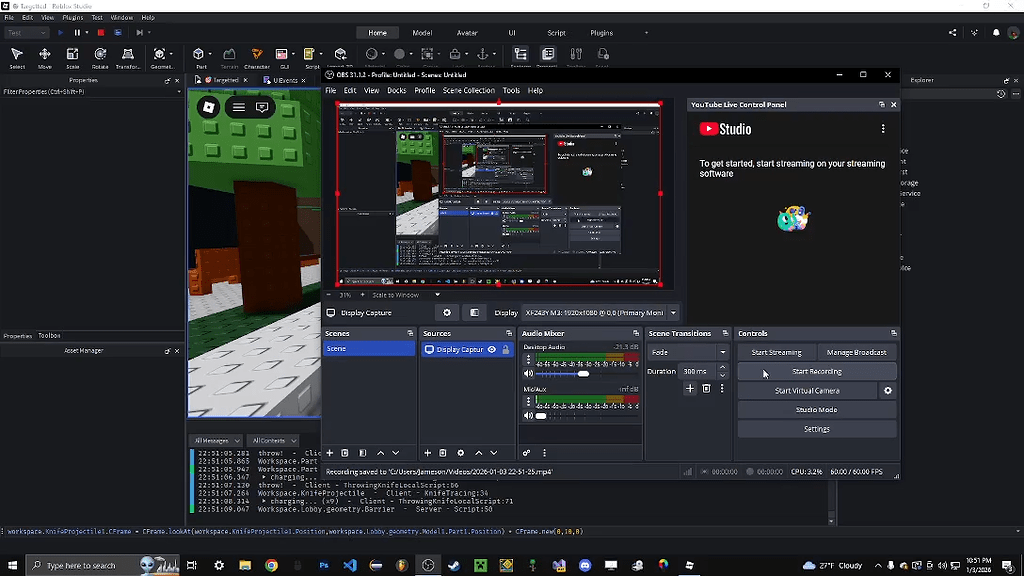


Part Collides With Itself With Touched Event On Client Side 2 1024x576 . ROBLOX Scripting School 5 Easy Touched And TouchEnded Events . Roblox Touch Events Ultimate Guide YouTube . 2026 How To Display A Text Label On Player S Screen When A Part Is Hqdefault . How To Code A Touched Function Roblox Studio YouTube


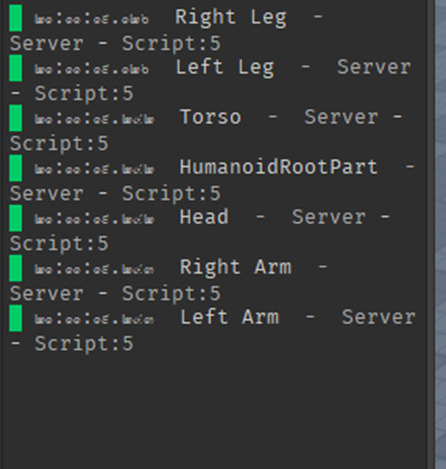

Touch Part Script Does Not Work Scripting Support Developer Forum . 2025 Telekinesis Script Roblox Universal Telekinesis Fe Telekinesis Script Roblox 1.webp. How To Make Team Work With Touched Script Scripting Support . PART TOUCH TO GUI ANIMATION Roblox Scripting Tutorial YouTube . C Mo Hacer Un Script En Roblox Studio Ep 6 Touched Event


What Is A Roblox Script How To Create One Hq720 9 2 1144x644 . How To Script On Roblox Part 8 Touched Event YouTube . How To Use Touched And TouchEnded Events Roblox Studio Scripting YouTube . How To Detect If Something Touched A Part In Roblox Roblox Scripting Hqdefault . Learn Roblox Scripting


How To Make A Badge Awarded When A Part Is Touched Roblox Scripting . ROBLOX Scripting How To Make An On Touched Script GlobeOfGeek . How To Message On Roblox 2026 A Quick Guide . Roblox Scripting Tutorial On Touch Function YouTube . Touched Problems Scripting Support Developer Forum Roblox 2 1024x576


Touch Football Soccer AUTOFARM GOALS 500 PER SEC Roblox Scripts NoFilter. How To Make Team Work With Touched Script Scripting Support 2 1024x674 . Adding An Event When 2 Parts Are Touched Scripting Support 2 1024x521 . Roblox Scripting Guide Touched Function In A Part YouTube Hqdefault . How Do I Make A Touched Function In A LocalScript Scripting Support